App updates can sometimes shuffle the order of puzzles. If this level 222 walkthrough doesn't match your screen, don't worry! You can browse our All Levels guide to find your exact puzzle by its picture.
The sequence follows a straightforward alternating arithmetic pattern—just identify the final operation and enter the result directly.
Level Overview
What Makes This Puzzle Tricky
You’re greeted with a clean row of blue numbers against a dark background. Your first instinct? Hunt for hidden letters or disguised clues. You brace for a UI twist—swiping, dragging, or tapping in odd places. Nothing responds. Level 222 throws you off by presenting something deceptively ordinary: a basic number sequence. After so many mind-bending stages that break conventions, simplicity feels like the ultimate trap.
Your Goal
This time, the goal is refreshingly direct. No illusions, no misdirection—just solve the math and type the answer. You’re not manipulating objects or triggering animations. You’re applying elementary arithmetic logic and entering digits into a standard text field. It’s a deliberate reset: silence the puzzle-hunter instincts and engage your number sense instead.
Here is what you are actually dealing with in this specific stage:
- Logic trap
- Math sequence
- Standard text input
- Reverse psychology It’s not a typo. It’s ammo.
What Appears on Your Screen
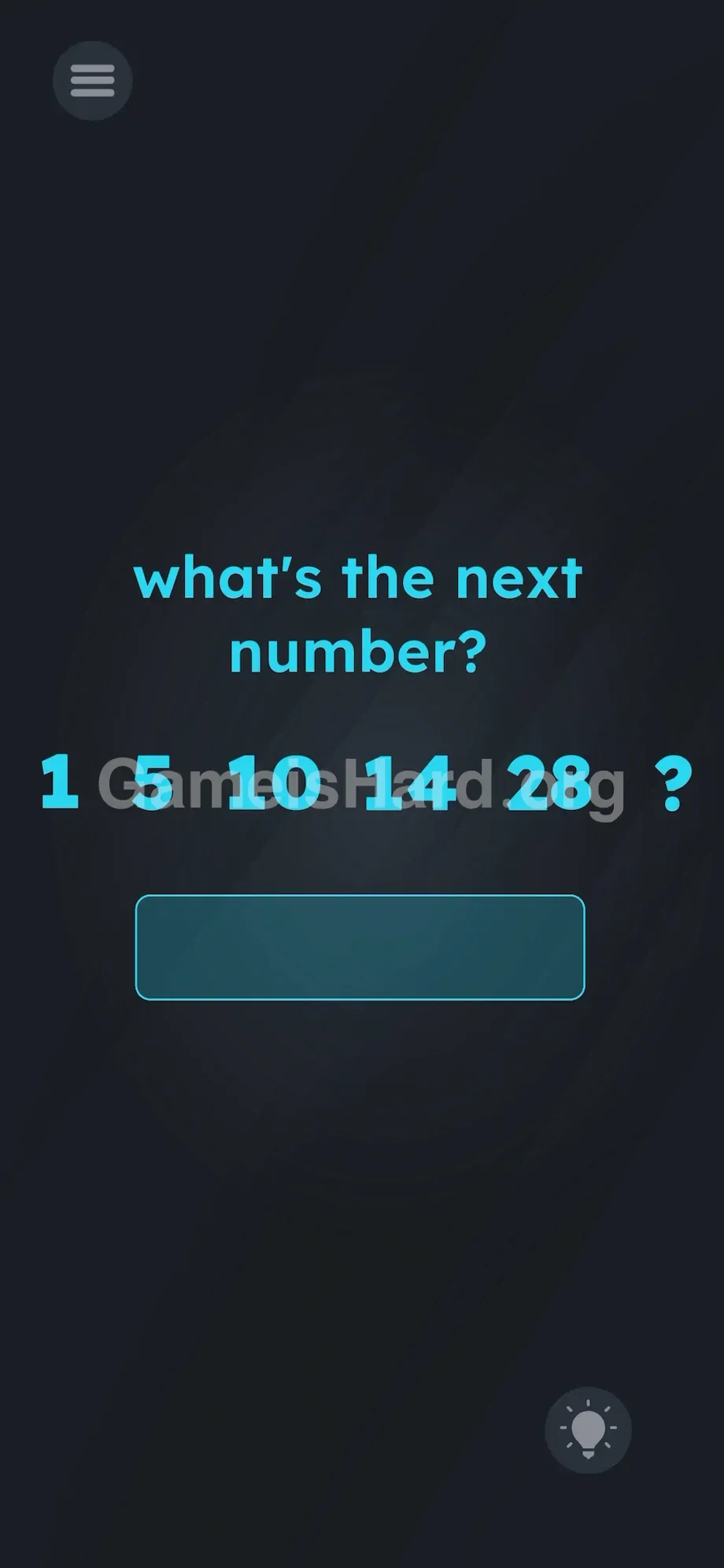
Let's map out the screen layout so we are perfectly clear on the interactive zones. Top center, you have the main prompt reading what's the next number? in lowercase blue letters. The font is completely uniform. No weird spacing.
Directly below that sits the actual puzzle sequence: 1 5 10 14 28 ? . These digits are larger, also tinted blue, and spaced out evenly across the center of the screen.
Underneath the question mark sits an empty box . It has thin blue borders, rounded corners, and a dark interior. It looks exactly like a standard form field on a website.
You also have your standard persistent UI elements. The hamburger menu icon sits up in the top left corner, waiting to pause your game. The lightbulb hint button rests quietly in the bottom right corner. The background is a dark, slightly textured gray. Everything looks far too normal. That uniform, predictable layout is precisely what makes the solution feel so suspicious.
Common Mistakes to Avoid
The Trap
You’ve developed “UI Blindness” from repeated exposure to tactile tricks. This game trains you to treat on-screen text as physical material—something you pull, rotate, or smash apart. So when you see a clean math problem with a functional input box, your brain rejects it outright. You assume there must be a hidden mechanic. But the real deception is expecting complexity where none exists—the absence of gimmicks is the design.
First Instincts That Fail
I tried extracting the “1” and “4” from the sequence to manually construct “32.” Wasted effort. Shaking the phone does nothing. Tapping the ? repeatedly just leaves fingerprints. You’re conditioned to treat numbers as draggable assets—but here, they’re fixed, inert, and purely symbolic.
Player Reactions
I spent ten minutes trying to drag the “1” and “4” together, convinced I’d cracked a secret combo. Nope—just overengineering. Total facepalm moment when I stepped back and saw the obvious +4 / ×2 rhythm staring me in the face. The game didn’t trick me. I tricked myself.
Step-by-Step Solution
Preparing the Move
Pause for a second. Put your phone down. Study the gaps in the sequence: 1 5 10 14 28 ? . Focus only on how each number transforms into the next. Ditch the puzzle reflexes—no need for paper unless your mental math needs backup.
Executing the Solution
- Look at the transition from the first number to the second. 1 to 5 . You get there by adding four. The first rule is +4. (1 + 4 = 5).
- Look at the next jump. 5 to 10 . Adding five works, but it breaks the sequence later. Multiplying by two is the actual rule here. (5 x 2 = 10).
- Verify the alternating pattern on the next set of digits. 10 to 14 is plus four. The pattern holds. (10 + 4 = 14).
- Check the next jump to completely confirm the rule. 14 to 28 is times two. The alternating sequence is locked in. (14 x 2 = 28).
- Apply the final step to the last number. The next operation must be plus four. 28 + 4 = 32 .
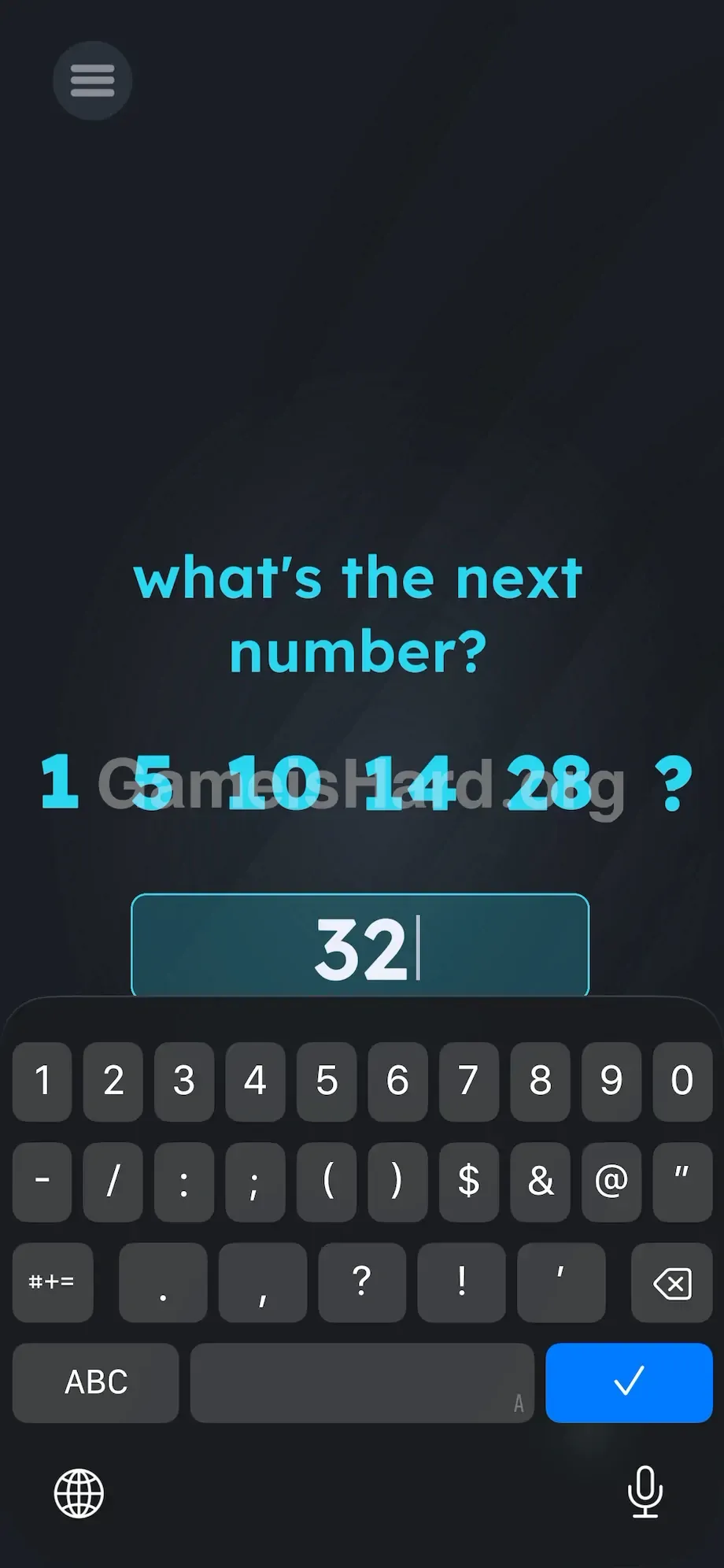
- Tap the empty box directly below the sequence. Your system keyboard will pop up from the bottom of the screen.
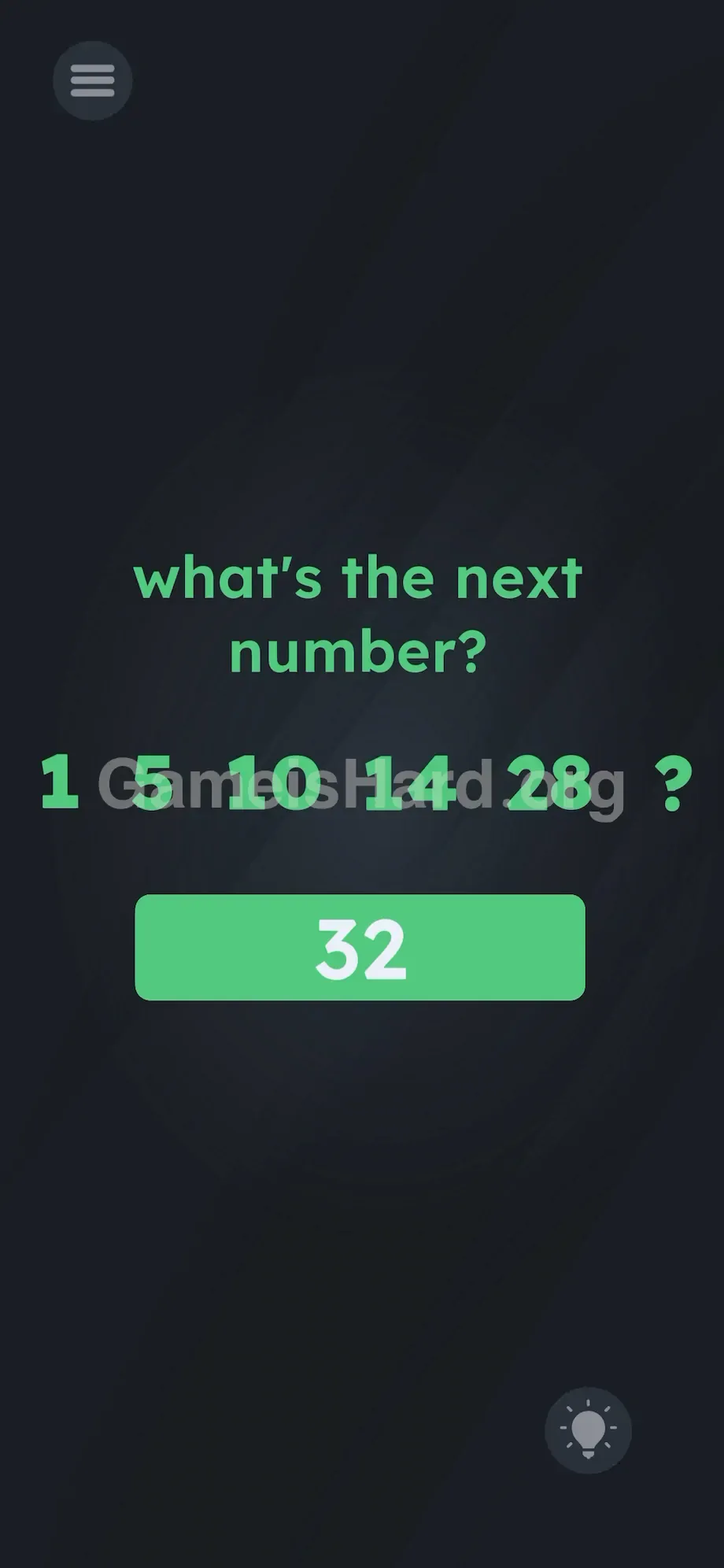
- Type 32 and hit submit. The box and the numbers will turn bright green, signaling a clear.
If It Did Not Work
- If the keyboard refuses to pop up when you tap, you might be tapping slightly outside the hit box. Tap dead center in the empty box .
- Make sure you are not adding extra spaces or symbols. Just the raw digits 32 . The game will reject " 32 " or "32 ".
- Do not try to drag the numbers from the prompt into the box. It will not register as an input.
- If the UI completely bugs out and the numbers don't turn green immediately after typing, force close the app. Clear your device cache. Sometimes the text input layer gets sticky on older phones and fails to trigger the success state.
Why This Solution Works
Game is hard Level 222 strips away the crazy physical interactions to test your basic pattern recognition. The rule here is a strict, two-step alternating mathematical sequence: add four, multiply by two, repeat indefinitely.
The developers know exactly how paranoid you are right now. After making you drag words off the screen, tilt your phone upside down, and shout into the microphone for the last fifty stages, they drop a raw, unfiltered math problem on your lap. The instructions are bait; the UI is the real puzzle. You spend so much energy looking for the hidden physics trick that you completely ignore the obvious numerical sequence right in front of your face.
The game treats letters like puzzle pieces constantly. It trains you to ignore what words mean and focus on what words are . This time, it flips the script. It treats numbers like actual numbers. The values matter. The sequence matters. That is brilliant, frustrating reverse psychology. You beat yourself before the game even tries.
Bonus Tip
Do not let the paranoia slow your run down. If you are speedrunning, grinding an alt account, or just want to clear this stage instantly without the mental gymnastics, execute this exact sequence.
- Stop trying to drag the blue numbers. They are completely static.
- Calculate the alternating +4 and x2 pattern instantly.
- Lock in the final step: 28 + 4.
- Tap the empty box , type 32 , and hit enter. Do not waste a single second trying to combine the existing digits on the screen. The physics engine is turned off for this puzzle. Treat it like a math test.
Frequently Asked Questions
Why won't the blue numbers move when I drag them? Because this specific stage disables the drag mechanics completely. The text is entirely static. You must use your device's system keyboard to input the answer.
Is there a hidden number behind the question mark? No. The ? is just a standard punctuation mark indicating the end of the visual sequence. Do not bother trying to move it or erase it.
What is the exact math formula to solve this? The sequence alternates between adding four and multiplying by two. The breakdown is: 1 (+4) 5 (x2) 10 (+4) 14 (x2) 28 (+4) 32.
My keyboard isn't showing up when I tap the box. What do I do? Tap the dead center of the empty box . If your device's virtual keyboard still fails to trigger, restart the application. The touch targets occasionally misalign if you swap apps frequently.
Does tapping the lightbulb give away the math pattern? Tapping the lightbulb will cost you a hint point, but it usually just points out the alternating +4 and x2 rule. Save your hints for the actual physics puzzles. You have the math right here.
More Game Is Hard Solutions
We built these guides to get straight to the point. No fluff. Just the exact steps, mechanics, and logic you need to clear the stage and keep moving. Share this Game is hard Level 222 guide with your Discord group if they are stuck overthinking the math sequence. Stop dragging UI elements that don't move. Keep pushing forward and absolutely crush the next stage.