App updates can sometimes shuffle the order of puzzles. If this level 193 walkthrough doesn't match your screen, don't worry! You can browse our All Levels guide to find your exact puzzle by its picture.
Level Overview
What Makes This Puzzle Tricky
You glance at the screen—seems straightforward. A familiar pattern unfolds: 2, 4, 8… Your brain immediately jumps to “16!” Then you scan the options below: 12, 24, 10. None match. It feels like a glitch—or like you’ve forgotten basic arithmetic. The answer stares you in the face, but there’s no button labeled “16” to tap.
Your Goal
This isn’t about solving an equation with multiple-choice answers. It’s about rearranging elements on screen to complete the correct numeric sequence. The game disguises itself as a quiz—but you’re really editing a broken string of numbers.
Key Mechanics:
- Text Drag / UI Drag: The numbers on screen aren’t static labels—they’re interactive objects you can move.
- Logic Traps: The bottom-row numbers (12, 24, 10) exist only to mislead and stall you.
- Hidden Object: The solution is visible from the start—it’s the final “16” in the sequence, waiting to be repositioned. It’s not a math test. It’s a visual puzzle disguised as one.
What Appears on Your Screen
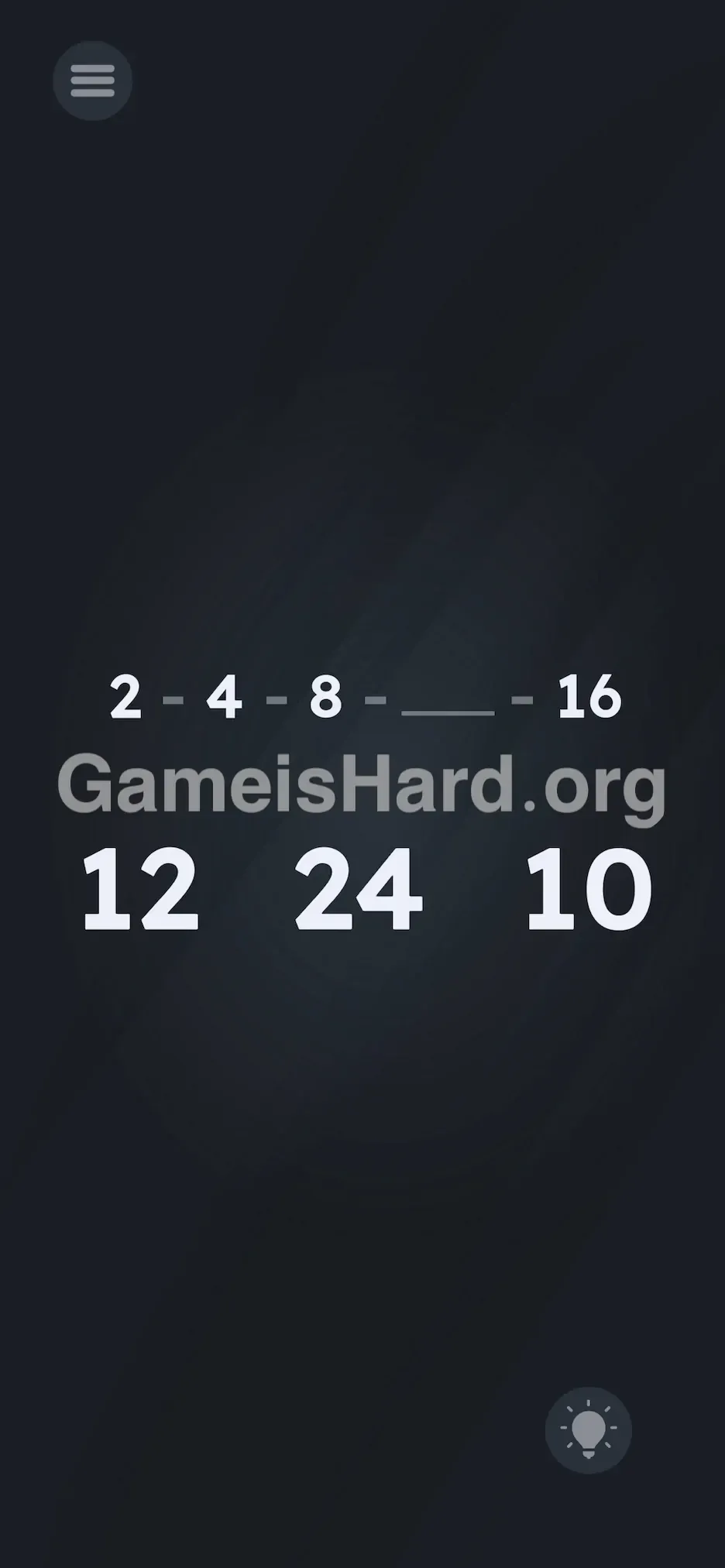
Let’s map out the layout. It’s clean and minimal: dark background, crisp white text.
- The Equation: Centered, you see 2 - 4 - 8 - ___ - 16 .
- The Blank: A clear underscore (___) sits where the next number belongs.
- The Distractors: Three large, tappable numbers sit beneath: 12 , 24 , and 10 .
- The Spacing: That last “16” aligns neatly with the others—it looks identical, and crucially, it’s not locked in place.
Common Mistakes to Avoid
The Trap
This level leans hard into “test mode” reflexes. Years of standardized testing taught us: read the question, solve mentally, pick the matching option. When none match, we second-guess ourselves—rechecking calculations, overcomplicating patterns, chasing false leads like “8 + 4 = 12” or “8 × 3 = 24.”
First Instincts That Fail
- Clicking 12: You might force-addition logic (“+2, +4, +4?”), but it breaks the consistency.
- Clicking 24: Multiplying 8 by 3 feels plausible—until you realize it ignores the earlier doubling.
- Shaking the phone: A common reflex in this game, but here it does nothing—the numbers stay put.
Player Reactions
I stared at this for over two minutes. I even squinted, wondering if the blank was secretly a minus sign. I tried solving “8 − x = 16” just to break the loop. Felt ridiculous once I realized the trailing “16” wasn’t the result—it was raw material.
Step-by-Step Solution
Preparing the Move
Skip the bottom row entirely—those numbers (12, 24, 10) serve no purpose. Focus solely on the top line: 2 - 4 - 8 - ___ - 16 . Your target is the standalone “16” at the far right.
Executing the Solution
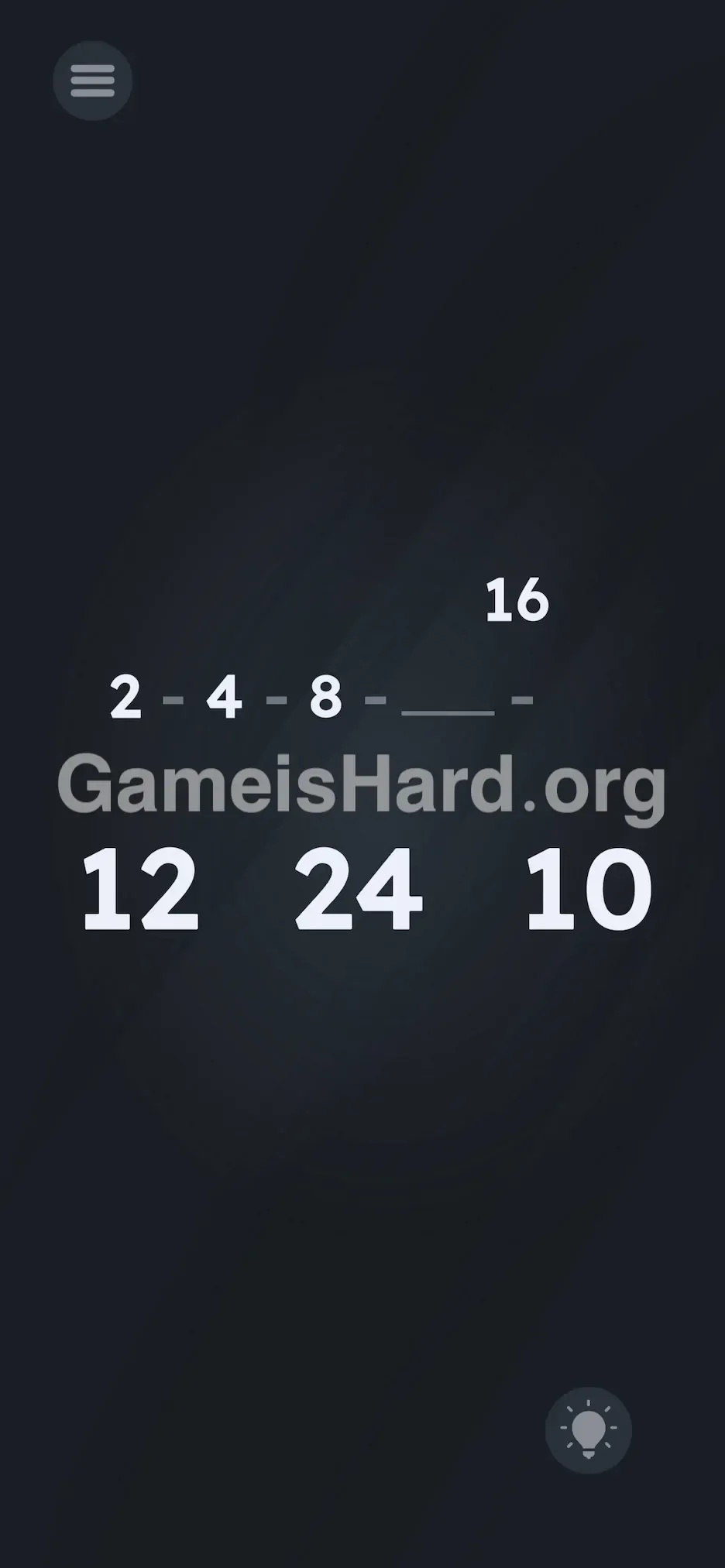
- Tap and hold your finger directly on the number 16 at the end of the equation.
- Drag it smoothly leftward across the screen.
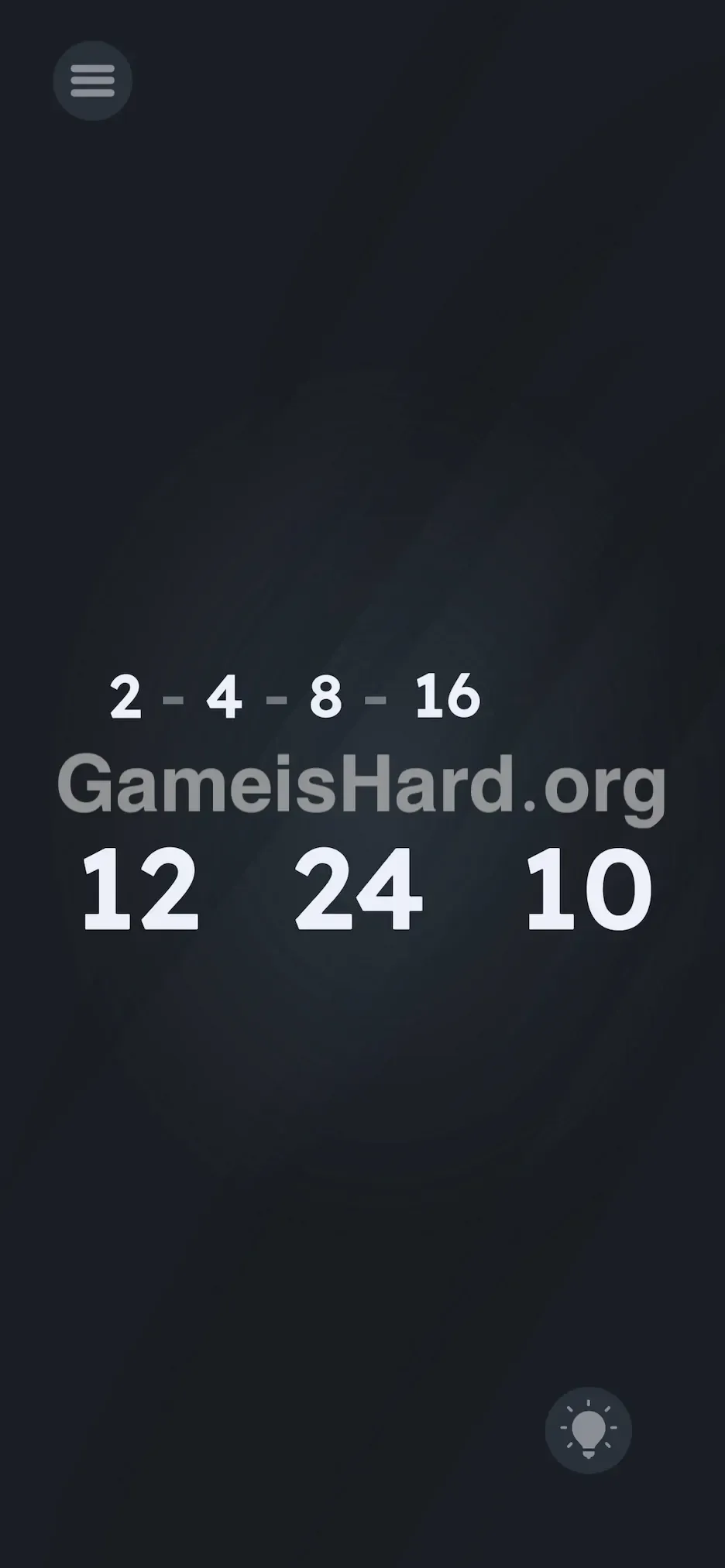
- Release it precisely onto the underscore ( ___ ) positioned between the 8 and where the 16 originally sat.
Confirming It Worked
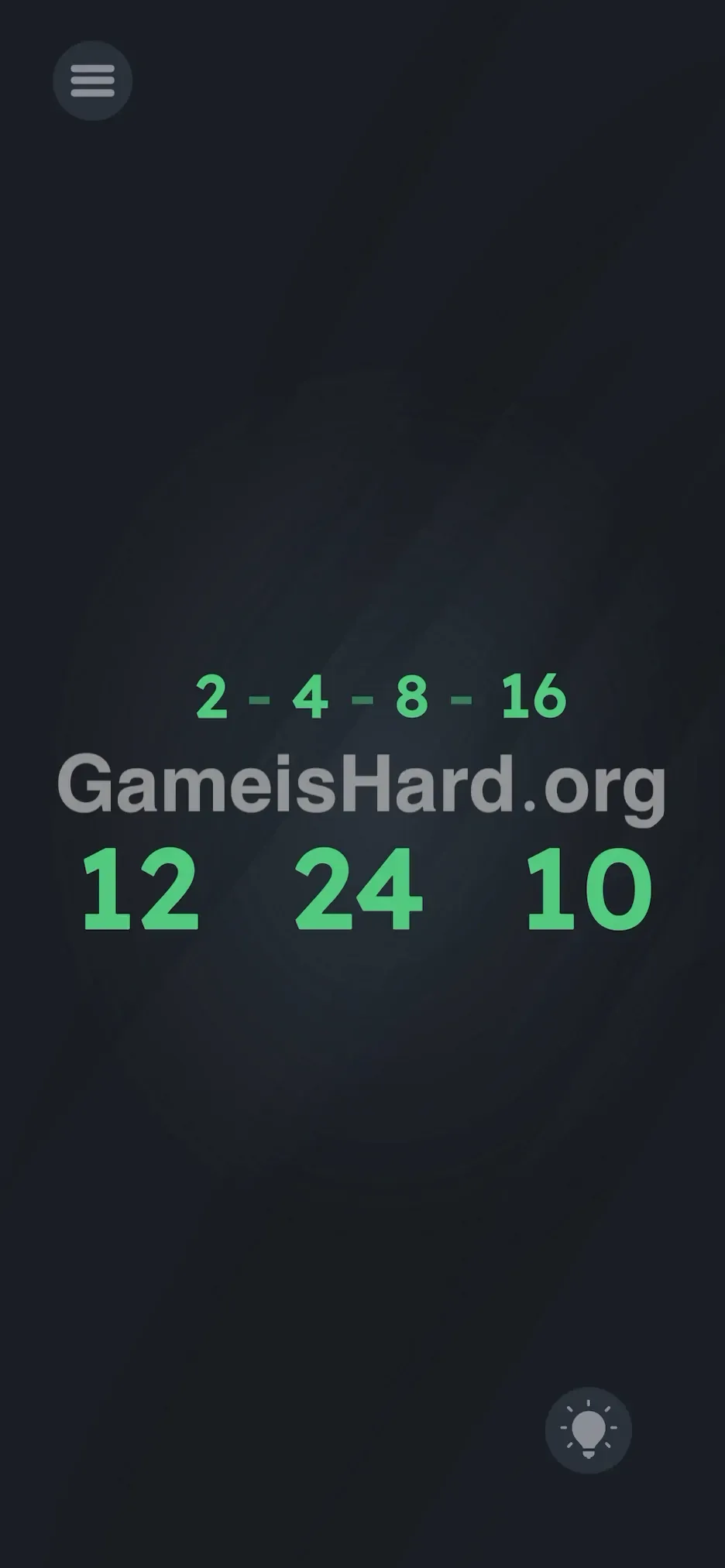
The line now reads 2 - 4 - 8 - 16 . The level completes instantly. That blank asked for the next term in a geometric progression (each number doubles the last), and you placed it yourself.
If It Did Not Work
- My finger slips: If the 16 snaps back, you missed the drop zone. Aim carefully—center your release on the underscore.
- I clicked a wrong number: Tapping 12, 24, or 10 triggers a red ‘X’. Wait for it to fade, then go straight for the draggable 16. No penalties—just a quick reset.
Why This Solution Works
Two core ideas power this puzzle. First, Geometric Progression : The sequence follows powers of two ($2 \times 2 = 4$, $4 \times 2 = 8$, $8 \times 2 = 16$)—a pattern your brain recognizes instantly.
Second—and more critically—UI Blindness . The game trains you to treat on-screen text as untouchable instructions. By embedding the answer within the question, it rewards players who question interface assumptions and interact with the layout itself—not just the content.
Bonus Tip
If you’re speed-running or replaying:
- Don’t glance at the bottom options.
- Grab the rightmost 16 without hesitation.
- Drop it into the blank—done in under two seconds.
- Move on.
Frequently Asked Questions
Q: Why isn't the answer 12? A: This is a doubling sequence (powers of 2), not addition. 2 → 4 → 8 → 16 fits perfectly; 12 would break the consistent ×2 rule.
Q: Can I drag the numbers from the bottom? A: No. The 12, 24, and 10 are fixed action buttons—you can only tap them, not move them.
Q: Is this a glitch? The 16 is already there! A: Not at all—it’s intentional design. The layout mimics “2 - 4 - 8 - [ANSWER] = 16”, but it’s actually just a list needing completion using what’s already present.
Q: Do I need to double tap? A: Nope. A single, smooth drag-and-drop is all it takes.
More Game Is Hard Solutions
If this guide saved your streak, we’ve got hundreds more. These puzzles grow stranger, and their logic grows sharper. Dive into our full Game is hard walkthrough library to keep your mind sharp and your progress unbroken. Good luck—and stop trusting those multiple-choice buttons!